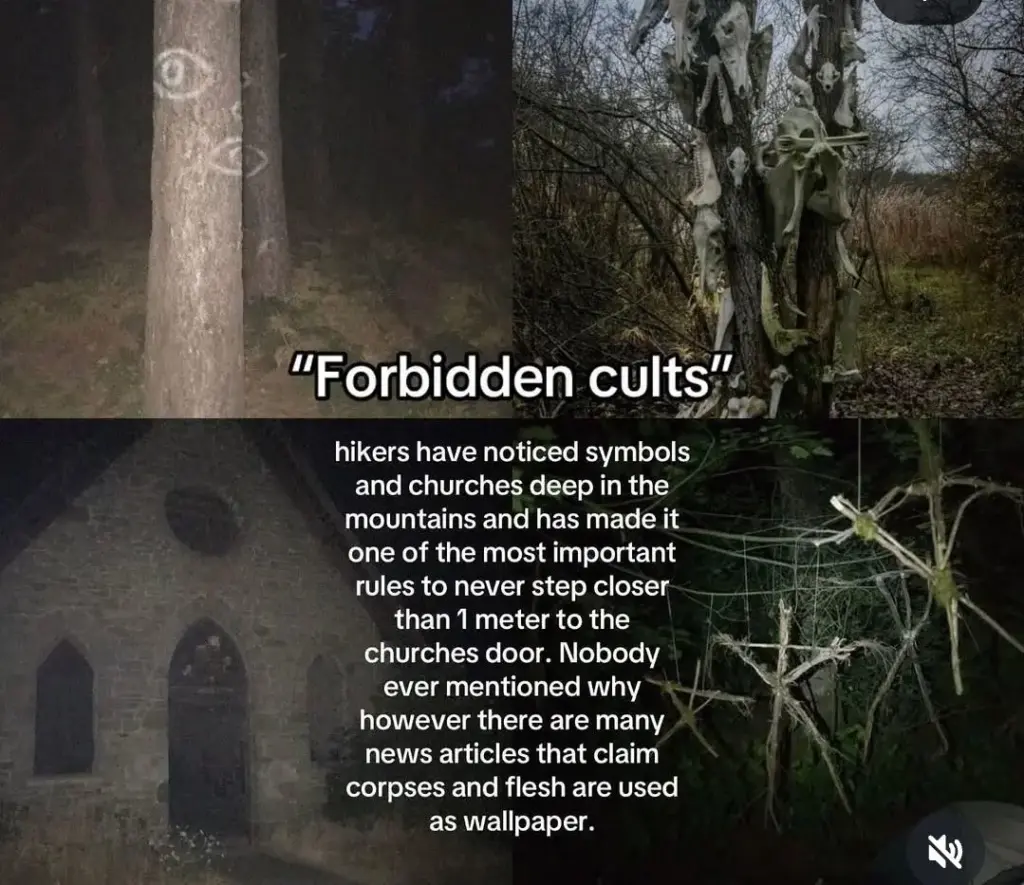
My cousin Mina came back from a trek last autumn with a photograph she wouldn’t show anyone at dinner. It was a small stone church, half-swallowed by pines, with a door that looked freshly painted. She said the villagers had been friendly until she asked about it — then the conversation just stopped. What stayed with me wasn’t the building. It was the rule: never step closer than one meter to that door. Nobody explained why, and she never asked again.
That silence is the thing, isn’t it? You can find thousands of trail guides online, but almost nothing about the strange little churches scattered through mountain ranges — the ones hikers photograph and locals avoid. So I went looking. Below are sixteen places, archives, and rabbit holes where those stories actually live, starting with the one that started this whole search.
Table of Contents(Click to Toggle)
- Why Mountain Church Legends Stick With You
- 16 Places to Trace the Mystery
- 1. Atlas Obscura
- 2. The Church of Saint John of the Mountain
- 3. Atlas of Places
- 4. Weird Island
- 5. The Megalithic Portal
- 6. Wikipedia’s List of Legendary Churches
- 7. Atlas Obscura’s Community Forum Threads
- 8. OpenStreetMap
- 9. The Mountain Bothies Association
- 10. Atlas Obscura’s Podcast
- 11. Reddit’s r/AbandonedPorn
- 12. The Modern Antiquarian
- 13. Atlas Obscura’s Trips & Experiences
- 14. Wikimapia
- 15. The Internet Archive’s Travel Collections
- 16. Atlas Obscura’s Places App
- Bonus: Atlas Obscura’s Book
- Bonus: Atlas Obscura’s Newsletter
- Bonus: Atlas Obscura’s YouTube Channel
- Bonus: Atlas Obscura’s Instagram
- The Internet’s Best-Kept Secrets (So Far)
Why Mountain Church Legends Stick With You
Here’s the mechanism, in plain language: a story spreads when it has a gap in it. A legend with a monster is easy to dismiss. A legend that’s just a rule — don’t get close, don’t ask, don’t open it — leaves your brain working overtime to fill in the blank. That’s why the one-meter rule is more frightening than any ghost story. You do the haunting yourself.
Mountain churches are perfect for this because they sit at the edge of the map. They’re real, they’re often centuries old, they’re isolated enough that nobody contradicts the story, and they’re usually locked, which means the door stays a mystery. The sites below are where people actually document them — photos, coordinates, folklore collected from villagers, and the occasional forum thread where a hiker admits they counted their steps.
16 Places to Trace the Mystery
1. Atlas Obscura : The largest curated map of strange places on Earth
What it is: A collaborative atlas of the world’s unusual, overlooked, and legend-wrapped places, with entries written by travelers and researchers.
Category: Curated place database
Why it stands out: The entries are short, specific, and sourced — a church entry might give you the village name, the century it was built, and the exact piece of folklore attached to it. The search filters let you browse by country and by category, so you can pull up “sacred sites” in a mountain region and start reading.
Best for: The first stop when you have a place name and want context fast.
2. The Church of Saint John of the Mountain : A real example of how legends get attached to buildings
What it is: A Wikipedia entry for a small mountain church — exactly the kind of page that quietly collects local legend alongside architectural facts.
Category: Reference article
Why it stands out: Read it as a template. Notice how a building’s history, its isolation, and a single unexplained detail create the story. Once you see the pattern, you’ll spot it in every village church you find.
Best for: Learning to tell a real historical record from a story that grew around it.
3. Atlas of Places : A quiet archive of architectural oddities
What it is: A minimal, beautifully photographed collection of buildings and landscapes, organized by theme rather than location.
Category: Architecture archive
Why it stands out: No ads, no pop-ups, just high-resolution images and short captions. It’s the closest thing online to flipping through a stranger’s travel sketchbook.
Best for: Slow browsing on a Sunday afternoon.
4. Weird Island : Folklore and strange places, mostly British
What it is: A personal project cataloguing odd sites, folk tales, and local legends, with a strong focus on the UK and Ireland.
Category: Folklore blog
Why it stands out: The writing has a voice — the author clearly walked to these places. Entries often include the local story and the practical detail of how to reach the site.
Best for: Anyone planning a walking trip with a folklore detour.
5. The Megalithic Portal : User-submitted coordinates for ancient sites
What it is: A long-running community database of megaliths, stone circles, and old sacred sites, with photos and map pins.
Category: Community site database
Why it stands out: The map view is the killer feature. Zoom into a mountain range and watch dozens of pins appear — many with field notes from people who actually visited.
Best for: Finding sites that don’t appear in guidebooks.
6. Wikipedia’s List of Legendary Churches : A starting point for cross-referencing stories
What it is: Wikipedia’s list pages, which gather legendary and folkloric sites in one place with links to fuller articles.
Category: Reference index
Why it stands out: Lists like this are underrated. They give you names you’d never think to search, and each name is a doorway into local history.
Best for: Building a shortlist before you start reading deeper.
7. Atlas Obscura’s Community Forum Threads : Where travelers argue about what’s real
What it is: The discussion side of Atlas Obscura, where members trade tips, corrections, and personal accounts.
Category: Community forum
Why it stands out: This is where the one-meter rule gets debated. Someone will say the villagers were joking; someone else will say they weren’t. Reading both is half the fun.
Best for: The skeptic in you.
8. OpenStreetMap : Free maps that show what commercial apps skip
What it is: A volunteer-built world map you can edit and explore for free.
Category: Mapping tool
Why it stands out: Small chapels, ruins, and footpaths often appear here long before they show up anywhere else. Switch to the cycle or hiking layer and tiny mountain tracks appear.
Best for: Checking whether a “hidden” church is actually reachable on foot.
9. The Mountain Bothies Association : Simple shelter listings with real local knowledge
What it is: A charity that maintains basic shelters in remote areas, with a site listing locations and conditions.
Category: Outdoor resource
Why it stands out: The listings are plain and practical, but the surrounding notes often mention nearby ruins and old buildings — the kind of detail that starts a search.
Best for: Planning a route that passes something strange.
10. Atlas Obscura’s Podcast : Audio stories for the drive to the trailhead
What it is: A podcast series about curious places and the people who chase them.
Category: Podcast
Why it stands out: Hearing someone describe a place out loud changes how it lands. It’s a good way to get context before a trip without staring at a screen.
Best for: Commutes and long drives.
11. Reddit’s r/AbandonedPorn : Photo threads with location hints in the comments
What it is: A large subreddit for photographs of abandoned places, including churches, chapels, and mountain ruins.
Category: Photo community
Why it stands out: The comments are the real value. People ask where a photo was taken, and sometimes a local answers with a village name.
Best for: Visual inspiration and unexpected leads.
12. The Modern Antiquarian : Field notes from people who walked there
What it is: A community archive of ancient and historic sites, heavy on personal visit reports.
Category: Community archive
Why it stands out: The visit notes are honest — weather, access, whether the gate was locked, whether it felt worth the walk. That’s rarer than it should be.
Best for: Deciding whether a site is worth a detour.
13. Atlas Obscura’s Trips & Experiences : Small-group trips built around odd places
What it is: Curated small-group journeys and local experiences themed around unusual sites.
Category: Travel experiences
Why it stands out: Even if you never book one, the itineraries are free to read and make excellent route inspiration for your own trip.
Best for: Borrowing an expert’s route plan.
14. Wikimapia : Annotated maps with user descriptions
What it is: A map where users draw outlines around places and add descriptions.
Category: Mapping tool
Why it stands out: It’s patchy and old-fashioned, but that’s the charm — you’ll find a chapel labeled by a local with a sentence of history you won’t find anywhere else.
Best for: Cross-checking a site you found elsewhere.
15. The Internet Archive’s Travel Collections : Old guidebooks, scanned and free
What it is: A digital library of scanned books, including century-old travel guides and local histories.
Category: Digital archive
Why it stands out: Old guidebooks describe villages and churches that modern guides skip entirely. Search a region name and filter to texts — the results are often surprising.
Best for: Deep research on a specific valley or range.
16. Atlas Obscura’s Places App : A pocket map of nearby oddities
What it is: A mobile app version of the atlas, focused on what’s near you right now.
Category: Mobile app
Why it stands out: The nearby view is genuinely useful on the road — pull over in an unfamiliar town and see what’s within a short drive.
Best for: Spontaneous detours.
Bonus: Atlas Obscura’s Book : The printed version for offline browsing
What it is: A physical collection of curious places, good for reading without a screen.
Category: Book
Why it stands out: Page-turning beats scrolling when you’re planning. You notice entries you’d never search for.
Best for: Gifting to a hiker friend.
Bonus: Atlas Obscura’s Newsletter : A weekly dose of strange places
What it is: A free email with new and notable place entries.
Category: Newsletter
Why it stands out: It surfaces places you’d never think to search for, which is exactly the point.
Best for: Low-effort discovery.
Bonus: Atlas Obscura’s YouTube Channel : Short videos of far-off places
What it is: Video features on unusual sites and the people who care for them.
Category: Video channel
Why it stands out: Seeing a place move changes your sense of scale — a tiny chapel looks very different on video than in a photo.
Best for: A quick visual before you commit to a route.
Bonus: Atlas Obscura’s Instagram : Daily photos that start arguments in the comments
What it is: A feed of unusual places with captions that often include a slice of local lore.
Category: Social feed
Why it stands out: The comments are where locals show up and correct the record — sometimes with a story of their own.
Best for: Casual scrolling with a purpose.
The Internet’s Best-Kept Secrets (So Far)
What I love about this corner of the internet is that it rewards patience. None of these sites are built to go viral. They’re built by people who walked somewhere, took a photo, and wrote down what they saw. The one-meter rule exists because someone, at some point, decided the silence was worth keeping — and the best you can do is read carefully, cross-check, and respect the places you visit.
If you’re planning a trip, here’s one practical thing to do this week: pick a mountain range you’ve always wanted to walk, open OpenStreetMap, and look for small chapels or ruins near the trail. Then search that name on one of the archives above. You’ll almost always find something.
Have you ever come across a place like this — a building locals won’t talk about, or a rule nobody explains? Tell me in the comments. Talk it through with me.

Priya writes about how facts travel: why some corrections stick and others bounce off, and how wording changes what people believe. She draws on everyday examples from group chats, headlines, and public notices to explain why a true statement can still fail to persuade. Her pieces are conversational and aimed at anyone who has tried to correct someone online.