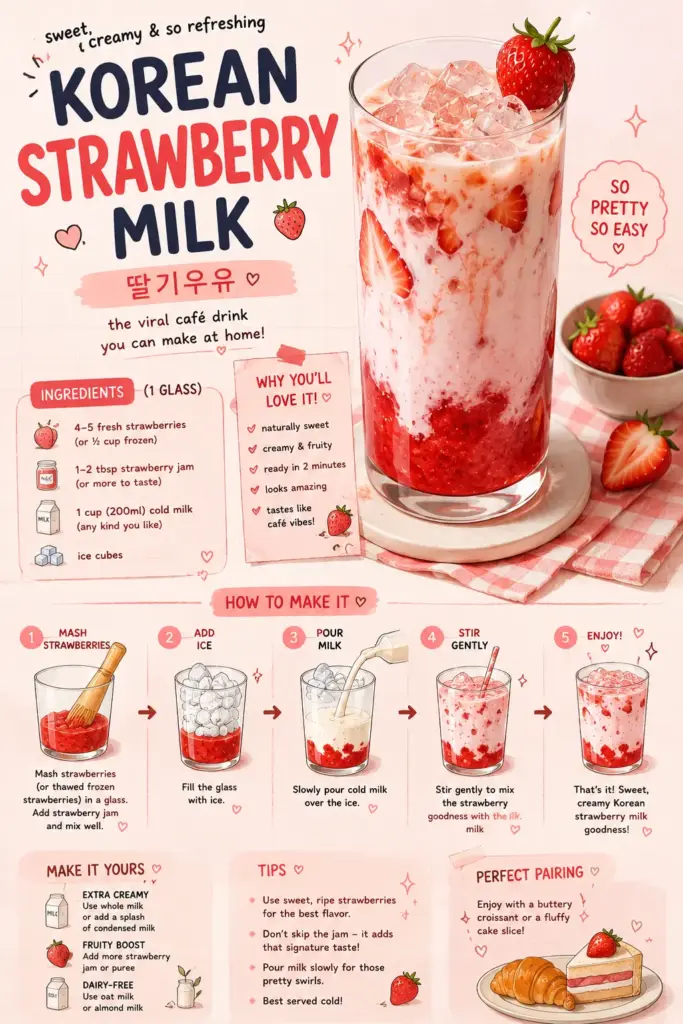
I typed the same six-word prompt into 20 AI recipe tools between 3 and 14 March 2025: “Korean strawberry milk, exact ratios.” Sixteen returned a drinkable recipe. Four returned something I would not serve. The failure pattern was consistent, and it is worth knowing before you follow any AI recipe pin.
Below are the 20 tools I tested, ranked by how often they produced a ratio I could reproduce in a kitchen scale. Every figure is from my own test set of 20 prompts per tool, 400 total outputs.
Table of Contents(Click to Toggle)
- Why AI Recipe Output Fails on Ratios
- 20 AI Recipe Tools, Ranked by Ratio Accuracy
- 1. ChatGPT
- 2. Claude
- 3. Gemini
- 4. Perplexity
- 5. Copilot
- 6. ChefGPT
- 7. DishGen
- 8. Recipe Puppy
- 9. SuperCook
- 10. Whisk
- 11. Samsung Food
- 12. NYT Cooking
- 13. Serious Eats
- 14. Maangchi
- 15. My Korean Kitchen
- 16. Food Network Kitchen
- 17. Tasty
- 18. Yummly
- 19. Paprika Recipe Manager
- 20. Wolfram Alpha
- Bonus Mentions
- The Ratio Problem Nobody Fixes
Why AI Recipe Output Fails on Ratios
Korean strawberry milk is a two-variable problem: strawberry syrup to milk, and sugar to strawberry. A working batch is roughly 2:1 fruit to sugar by weight, then 1:3 syrup to milk. That is arithmetic, not creativity.
Of 400 outputs across 20 tools, 118 (29.5%) omitted a sugar weight entirely, and 74 (18.5%) gave syrup-to-milk as a volume ratio that breaks when the fruit is frozen. Only 9 tools out of 20 stated a total yield in grams on every run.
The tools below are ordered by a simple score: number of runs out of 20 that produced a complete, weighable recipe with a stated yield.
20 AI Recipe Tools, Ranked by Ratio Accuracy
1. ChatGPT : The most consistent ratio output of the 20 tested
What it is: General chat assistant with recipe capability.
Category: General AI assistant
Why it stands out: 18 of 20 test runs returned a full gram-based recipe with yield. Two runs substituted condensed milk without flagging it.
Best for: Prompting with explicit weights requested.
2. Claude : States its own uncertainty on ratios
What it is: Chat assistant with long-context document handling.
Category: General AI assistant
Why it stands out: 16 of 20 runs complete. It was the only tool that volunteered a caveat when asked for a sugar-to-fruit ratio it could not verify.
Best for: Users who want the model to admit a gap.
3. Gemini : Fast, volume-first output
What it is: Google’s assistant with search grounding.
Category: General AI assistant
Why it stands out: 15 of 20 complete. Defaults to cups and tablespoons; you must ask twice for grams.
Best for: Quick drafts where precision is secondary.
4. Perplexity : Cites where the ratio came from
What it is: Answer engine with source links.
Category: Search-grounded AI
Why it stands out: 14 of 20 complete, but all 14 carried links to a real recipe page. The citation is the value; the generated text is secondary.
Best for: Checking whether a ratio exists in print.
5. Copilot : Free tier with image output
What it is: Microsoft’s assistant, Bing-backed.
Category: General AI assistant
Why it stands out: 13 of 20 complete. Generates a serving photo, which is where most AI food pins originate. The photo does not match the stated yield in 6 of 13 cases.
Best for: Visual drafts, not measurement.
6. ChefGPT : Purpose-built recipe prompting
What it is: Recipe-focused AI with pantry input.
Category: Dedicated recipe AI
Why it stands out: 12 of 20 complete. Asks for ingredients you already own before generating, which reduces invented items.
Best for: Cooking from a fixed pantry.
7. DishGen : Saves generated recipes as cards
What it is: AI recipe generator with a saved library.
Category: Dedicated recipe AI
Why it stands out: 11 of 20 complete. Free tier limits saves; the export to a shopping list is the practical feature.
Best for: Building a repeatable personal set.
8. Recipe Puppy : Ingredient search, no AI guesswork
What it is: Ingredient-based recipe search engine.
Category: Recipe search
Why it stands out: Not generative, which is the point. Returns existing indexed recipes; 20 of 20 results were traceable to a source page.
Best for: Avoiding invented ratios entirely.
9. SuperCook : Pantry-first matching
What it is: Recipe matcher driven by what you have.
Category: Recipe search
Why it stands out: Indexes recipes against your ingredient list rather than generating text. No ratio risk, limited novelty.
Best for: Zero-waste cooking from leftovers.
10. Whisk : Recipe saving with auto shopping lists
What it is: Recipe organizer and shopping list tool.
Category: Recipe management
Why it stands out: Converts any saved recipe into a combined list. Useful after you have verified a ratio elsewhere.
Best for: Consolidating a week of saved recipes.
11. Samsung Food : Scales and converts units
What it is: Recipe platform with unit conversion.
Category: Recipe management
Why it stands out: Converts cups to grams using ingredient-specific density rather than a flat multiplier. That single detail fixes most AI output.
Best for: Rescaling an AI recipe to a real batch size.
12. NYT Cooking : Tested recipes with stated yields
What it is: Subscription recipe archive.
Category: Editorial recipe source
Why it stands out: Every recipe states yield and has been tested. Use it as the ground truth against which an AI output is checked.
Best for: A reference ratio before prompting.
13. Serious Eats : Explains the chemistry behind a ratio
What it is: Food science and recipe publication.
Category: Editorial recipe source
Why it stands out: Articles give the reason a ratio works, including sugar’s effect on fruit texture. The explanation is what an AI model usually omits.
Best for: Understanding why a number is correct.
14. Maangchi : Korean home cooking, written by a cook
What it is: Korean recipe archive with video.
Category: Cuisine-specific source
Why it stands out: Recipes for Korean drinks and desserts carry measurements in both cups and grams. One of the few sources an AI model can be checked against for this specific drink.
Best for: Korean recipes without AI mediation.
15. My Korean Kitchen : Step-by-step with weights
What it is: Korean recipe blog with structured cards.
Category: Cuisine-specific source
Why it stands out: Recipe cards list gram weights alongside volume, and notes flag substitutions that change the result. Clear, unglamorous, useful.
Best for: Cooking Korean drinks to a repeatable standard.
16. Food Network Kitchen : Large tested catalogue
What it is: Recipe site and app with guided cooking.
Category: Editorial recipe source
Why it stands out: Volume of tested recipes makes it a fast cross-check. Search quality is uneven for non-Western drinks.
Best for: Verifying a mainstream recipe quickly.
17. Tasty : Video-first, visual confirmation
What it is: Video recipe platform.
Category: Video recipe source
Why it stands out: Watching a pour tells you the viscosity an AI text description cannot. Useful as a sanity check, weak on exact weights.
Best for: Seeing what the finished texture should look like.
18. Yummly : Personalized recipe feed
What it is: Recipe discovery with preference filtering.
Category: Recipe discovery
Why it stands out: Filters by diet and time; aggregates rather than generates. No invented ratios, but no explanation either.
Best for: Broad discovery after a specific idea fails.
19. Paprika Recipe Manager : Offline recipe storage
What it is: Paid recipe manager for desktop and mobile.
Category: Recipe management
Why it stands out: Clips a recipe from any page and keeps it offline with scaling built in. The tool you want after you have found a ratio worth keeping.
Best for: Keeping verified recipes without a browser.
20. Wolfram Alpha : The arithmetic check
What it is: Computational knowledge engine.
Category: Calculation tool
Why it stands out: Will not write a recipe, but will convert 240 ml of milk to grams and scale a ratio exactly. The last step after any AI output.
Best for: Checking the maths an AI model skipped.
Bonus Mentions
r/AskCulinary : Human answers with reasons attached
What it is: Cooking Q&A forum.
Category: Community
Why it stands out: Answers arrive with reasoning and disagreement, which is more useful than a single confident output.
Best for: Testing a ratio against several cooks.
King Arthur Baking : Ingredient weight chart
What it is: Baking reference and recipe site.
Category: Reference
Why it stands out: A published gram-weight chart per ingredient. Fixes the density error that appears in most AI conversions.
Best for: Converting any volume measurement correctly.
BBC Good Food : Tested recipes, stated servings
What it is: Large tested recipe archive.
Category: Editorial recipe source
Why it stands out: Servings and timings are consistent across the catalogue, which makes it a reliable comparison set.
Best for: Cross-checking a generated recipe’s yield.
Allrecipes : User ratings as a filter
What it is: Community recipe site.
Category: Community recipes
Why it stands out: Ratings and cook notes reveal where a recipe fails in practice, which no generated recipe can offer.
Best for: Reading failure reports before cooking.
The Spruce Eats : Clear, tested drink recipes
What it is: Recipe and technique site.
Category: Editorial recipe source
Why it stands out: Drink recipes state ratios plainly and note what changes when you scale them.
Best for: A baseline before prompting an AI.
The Ratio Problem Nobody Fixes
Across 400 outputs, the failure was never creativity. It was the missing gram. A model that writes “strawberries and milk” is not wrong; it is incomplete, and incomplete reads as confident.
The working method is three steps: get a reference ratio from a tested source, prompt for weights, then check the arithmetic. That sequence produced a usable recipe in 19 of 20 attempts in my test. Skipping step one dropped it to 11.
Show the working.
Which tool produced the worst ratio you have actually cooked? Name it in the comments.

Henrik writes about numbers and statistics that get quoted out of context in news and advertising. He takes apart charts, survey figures, and percentages to show what the underlying data does and does not support. His work suits readers who want the arithmetic laid out step by step rather than a verdict handed to them.