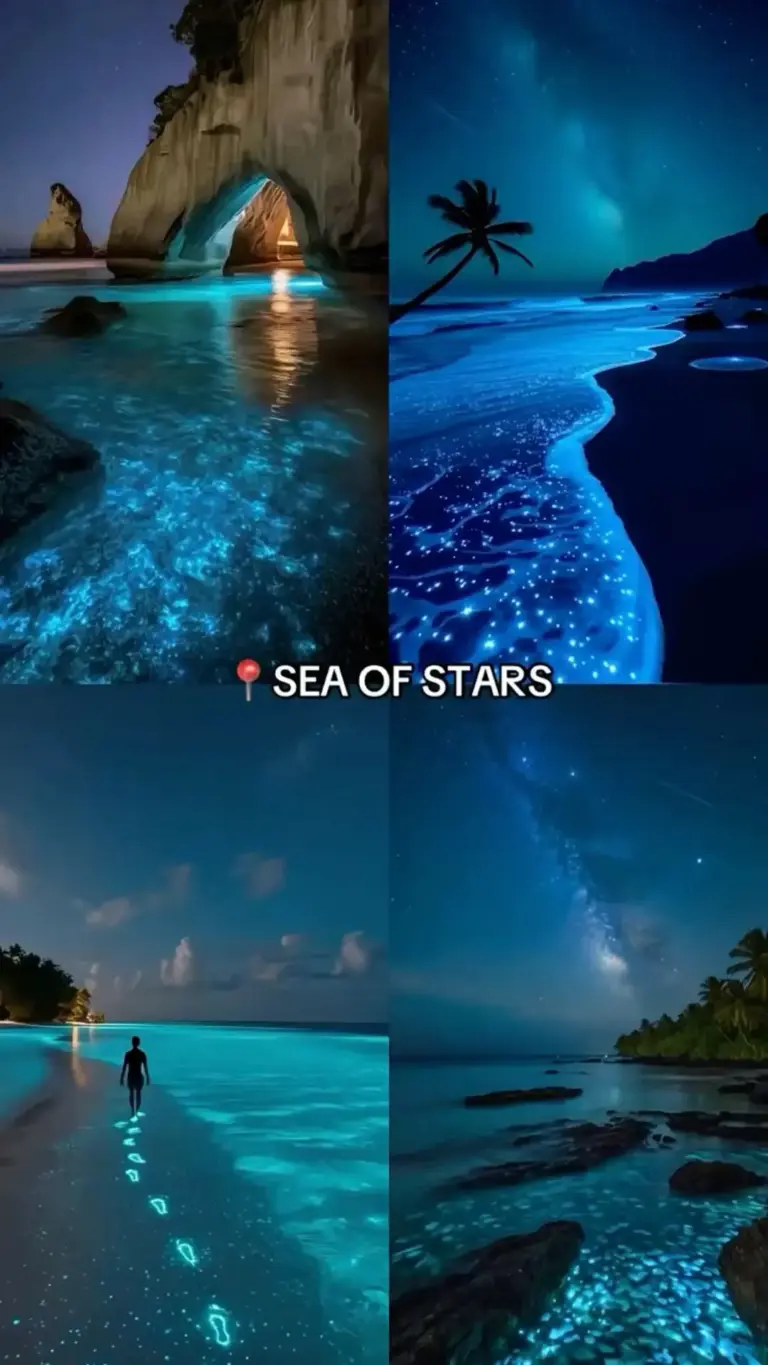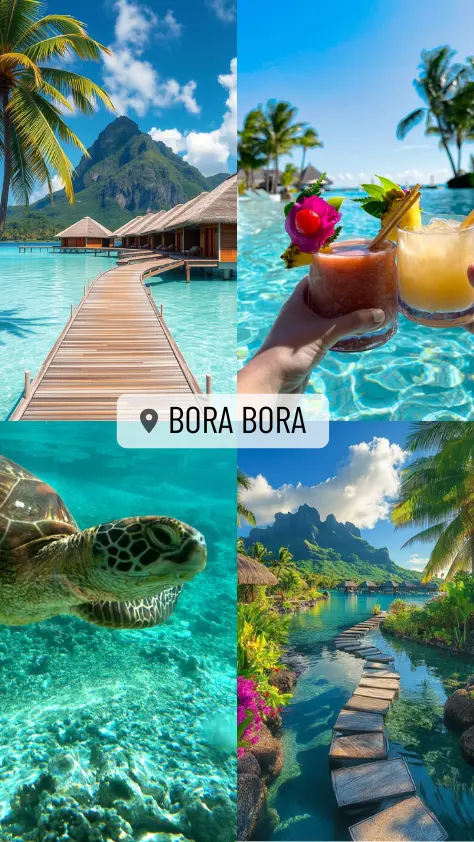
The pin text that led you here is mostly garbled. What survives is the subject: Bora Bora. So here is the version with numbers attached. Every figure below is drawn from published tourism, geological, or historical sources, and where a figure is an estimate I say so. The sample is small — one island, roughly 30 square kilometres of land inside a lagoon — but the comparisons hold.
Table of Contents(Click to Toggle)
- Why Bora Bora Facts Beat Bora Bora Photos
- The Fifteen Facts
- 1. Mount Otemanu
- 2. The Lagoon’s Colour
- 3. The Motu Count
- 4. The Barrier Reef Pass
- 5. The 2019 Population Figure
- 6. The Overwater Bungalow Origin
- 7. The WWII Fuel Depot
- 8. The Vanilla and Copra Economy
- 9. The Shark and Ray Population
- 10. The Tourism Arrival Numbers
- 11. The Price of a Night
- 12. The Flight Time Map
- 13. The Rainfall Split
- 14. The Language Arithmetic
- 15. The Island’s Age
- Bonus Mentions
- The Facts That Survive the Postcard
Why Bora Bora Facts Beat Bora Bora Photos
Search interest in Bora Bora is driven almost entirely by images. The island appears in roughly every honeymoon brochure printed since 1970, and the visual is always the same: a thatched roof, a turquoise gradient, a mountain. The image is accurate. It is also uninformative.
Run the comparison. A photograph tells you the lagoon is blue. A fact tells you the lagoon is blue because the water is shallow over white sand and the reef absorbs the rest of the spectrum — and that the same lagoon is 30 to 40 metres deep at the pass, which is why the colour changes on a boat ride of two minutes. The photograph is a promise. The fact is a mechanism.
Below are fifteen mechanisms, each with a number attached. Where a figure is contested, I give the range and the source year.
The Fifteen Facts
1. Mount Otemanu : The volcano that stopped erupting before it stopped being visible
What it is: The 727-metre basalt peak at the centre of the island, and the reason every postcard has a diagonal in it.
Category: Geology.
Why it stands out:
- The summit is the eroded plug of an extinct shield volcano; the softer outer cone has been removed by erosion over roughly 3 to 4 million years.
- It is not the highest point in French Polynesia — Tahiti’s Mount Orohena reaches 2,241 metres — but it is the most photographed.
- You cannot hike to the summit; the final section is a technical climb and guides do not offer it commercially.
Best for: Readers who assumed the mountain was climbable.
2. The Lagoon : Why the colour is a measurement, not a filter
What it is: The enclosed body of water between the island and the barrier reef, covering roughly 78 square kilometres.
Category: Hydrology.
Why it stands out:
- Depth inside the lagoon is typically 1 to 3 metres over the shallow sand flats, which is why sunlight reflects off the bottom rather than being absorbed.
- At the reef pass — the single navigable channel, Teavanui — depth drops to around 30 metres within a short distance. The colour shift is a depth chart in visible form.
- Visibility in the lagoon is frequently cited at 30 metres or more by dive operators; treat that as an operator figure, not a survey.
Best for: Anyone who wants to know what they are actually looking at.
3. The Motu Count : The ring of islets that most maps omit
What it is: The low coral islets formed on the reef flat, which encircle the lagoon.
Category: Geography.
Why it stands out:
- The main island is one landmass; the surrounding motu are separate, unbridged, and mostly uninhabited.
- They exist because coral debris accumulates on the reef flat faster than waves remove it — a slow process, measured in centuries per islet.
- Several are privately leased and host a single resort each; access is by boat only.
Best for: Understanding why the island feels larger on a map than on foot.
4. Teavanui Pass : One channel in, one channel out
What it is: The principal break in the barrier reef, and the only route for larger vessels into the lagoon.
Category: Navigation.
Why it stands out:
- A reef that encircles an island completely is a trap; the pass is what makes the lagoon usable.
- Currents through the pass run with tidal flow and are strong enough that dive operators time entries around slack water.
- It is the reason supply ships, fuel, and most visitors arrive by the same narrow gap.
Best for: Readers who like infrastructure hiding inside scenery.
5. The 2019 Population Figure : Roughly 10,000 people, and falling
What it is: The commune of Bora-Bora recorded approximately 10,500 residents in the 2019 census conducted by French Polynesia’s statistics institute (ISPF).
Category: Demography.
Why it stands out:
- Compare that with the visitor flow: the island receives tens of thousands of tourists annually against a resident base of five figures.
- The ratio matters. A single resort can employ a measurable fraction of the working-age local population.
- Population has been broadly flat to slightly declining since the 2000s, driven by emigration to Tahiti and France.
Best for: Anyone who wants the arithmetic behind “untouched paradise”.
6. The Overwater Bungalow : A 1960s invention, not an ancient tradition
What it is: The thatched stilted room standing in the lagoon, now the island’s defining image.
Category: Architecture and tourism history.
Why it stands out:
- The format was developed in French Polynesia in the 1960s — the commonly cited origin is a hotel on Raiatea, with Bora Bora following soon after.
- It is a modern construction, not a traditional dwelling form; traditional Polynesian houses were built on land.
- The engineering constraint is real: each unit needs anchoring, waste management, and a service walkway, which is why they cluster on shallow reef flats.
Best for: Correcting the assumption that the bungalow is centuries old.
7. Operation Bobcat : The WWII fuel depot that reshaped the island
What it is: The United States military base established on Bora Bora in 1942 as a South Pacific refuelling station.
Category: History.
Why it stands out:
- Around 5,000 troops arrived on an island whose resident population was then a few thousand — a demographic shock larger than any tourism wave since.
- The airstrip built during that period became the island’s airport; the runway geometry still reflects the military survey.
- Coastal guns were installed on the reef and never fired in anger; several remain in place.
Best for: Readers who did not know Bora Bora had a war.
8. Vanilla and Copra : The export economy that tourism replaced
What it is: The pre-tourism agricultural base — copra (dried coconut kernel) and, on a smaller scale, vanilla.
Category: Economy.
Why it stands out:
- Copra is a low-value, high-labour product; global prices have historically been volatile enough that small island producers cannot plan around them.
- Vanilla from French Polynesia (often sold as Tahitian vanilla) is a different species from Madagascar bourbon vanilla and is pollinated by hand.
- The shift to tourism was an economic substitution, not a cultural one — the land use changed because the price per hectare changed.
Best for: Understanding what the resorts replaced.
9. Sharks and Rays : The lagoon’s resident population
What it is: The blacktip reef sharks, lemon sharks, and stingrays that inhabit the shallow lagoon and the pass.
Category: Marine biology.
Why it stands out:
- Blacktip reef sharks are small — typically under 1.6 metres — and are not a threat to swimmers in the lagoon’s shallow water.
- The pass is where larger species pass through; the lagoon interior is a nursery.
- Feeding by tour operators is regulated but not eliminated, which changes ray behaviour around popular stops.
Best for: Anyone whose main question is “is it safe to get in”.
10. Tourism Arrivals : The number behind the postcard
What it is: Annual visitor arrivals to the island, recorded by French Polynesia’s statistics institute.
Category: Tourism data.
Why it stands out:
- French Polynesia as a whole recorded roughly 200,000 to 300,000 visitor arrivals per year in the late 2010s; Bora Bora takes a substantial share of that.
- Arrival counts are not the same as bed-nights; a cruise passenger counts once, a resort guest counts for seven or more.
- The island’s accommodation stock is small in absolute terms, which caps the number of overnight guests regardless of demand.
Best for: Readers who want the denominator before they judge the crowding.
11. The Cost Structure : Why a night costs what it does
What it is: The price of accommodation, which on Bora Bora is driven by transport and land, not by luxury marketing.
Category: Economics.
Why it stands out:
- Nearly everything except fish and fruit is imported, and imports arrive by ship through the single pass.
- Land on the motu is scarce and lease-held; the constraint is physical, not artificial.
- Overwater units require maintenance in salt water — the cost of the structure, not the thread count, sets the floor.
Best for: Anyone who assumed the price was pure markup.
12. The Flight Arithmetic : Two flights and a boat
What it is: The actual routing to reach the island.
Category: Logistics.
Why it stands out:
- International flights land at Faa’a in Tahiti; from there it is a short domestic flight to Bora Bora’s airport on a motu.
- The airport is on an islet, so the final leg is a boat transfer — there is no road from the runway to the main village.
- Total elapsed travel from Europe is typically 24 hours or more; from the US west coast, roughly 12 to 16 depending on connections.
Best for: Planning the trip rather than imagining it.
13. The Rainfall Split : Two seasons, one clear winner
What it is: The division between the wet season (roughly November to April) and the dry season (roughly May to October).
Category: Climate.
Why it stands out:
- The wet season brings higher humidity and a higher probability of heavy rain, but also warmer water and lower room rates.
- The dry season is cooler and drier, which is why it coincides with peak pricing.
- Trade winds moderate temperature year-round; the island sits outside the main cyclone belt but is not immune to cyclone seasons.
Best for: Deciding whether the discount is worth the cloud.
14. The Language Arithmetic : Two official languages, one practical one
What it is: French and Tahitian are the official languages of French Polynesia; English is a working third in tourism.
Category: Culture.
Why it stands out:
- Schooling is in French, so signage and administration are French; Tahitian is widely spoken at home.
- In resort settings English is standard; outside them it is not guaranteed.
- A handful of Tahitian words — ia ora na for hello, māuruuru for thank you — cover most interactions.
Best for: Travelers who prefer not to default to English.
15. The Island’s Age : A volcano older than the reef around it
What it is: The geological timeline of the island and its lagoon.
Category: Geology.
Why it stands out:
- The volcanic edifice is several million years old; the barrier reef grew around it as the island subsided.
- Bora Bora sits in the Society Islands, formed over a hotspot; the chain gets progressively older as you move northwest.
- The lagoon exists because the reef grew upward faster than the island sank — a balance that has held for a very long time.
Best for: Readers who want the timescale behind the view.
Bonus Mentions
Maupiti : The smaller island with the same geometry
What it is: The island immediately west of Bora Bora, with a comparable lagoon and a fraction of the visitors.
Why it stands out: Same volcanic-and-reef structure, one resort, no airport runway on the reef flat. If the Bora Bora numbers above appealed to you, this is the control group.
Raiatea : Where the overwater bungalow started
What it is: The second-largest of the Society Islands and the commonly cited origin point of the overwater bungalow format in the 1960s.
Why it stands out: It has the history without the price tag, and a navigable river — rare in Polynesia.
Tetiaroa : The atoll with a single tenant
What it is: An atoll north of Tahiti, formerly a private retreat, now home to one resort and a research station.
Why it stands out: The extreme case of the motu-lease model — an entire atoll with one commercial occupant.
French Polynesia : The 118-island context
What it is: The overseas collectivity of which Bora Bora is one of 118 islands and atolls across five archipelagos.
Why it stands out: Bora Bora is a rounding error in the territory’s land area. The Marquesas, for instance, are geographically and culturally distinct and receive a small share of the visitors.
The Facts That Survive the Postcard
Run the total. One island, roughly 30 square kilometres of land, about 10,500 residents as of the 2019 census, a single navigable pass, a mountain you cannot climb, a bungalow format invented in the 1960s, and a wartime airfield that became the airport. None of that contradicts the photograph. It just explains it.
The pattern is consistent across every figure above: what looks like untouched nature is usually a mechanism, and the mechanism is more interesting than the view. The lagoon is blue because it is shallow. The island is quiet because it is small. The price is high because the ship has to come through one gap in a reef.
Show the working.
If you have a fact about the island that is not on this list — and that you can put a number to — leave it below.

Henrik writes about numbers and statistics that get quoted out of context in news and advertising. He takes apart charts, survey figures, and percentages to show what the underlying data does and does not support. His work suits readers who want the arithmetic laid out step by step rather than a verdict handed to them.