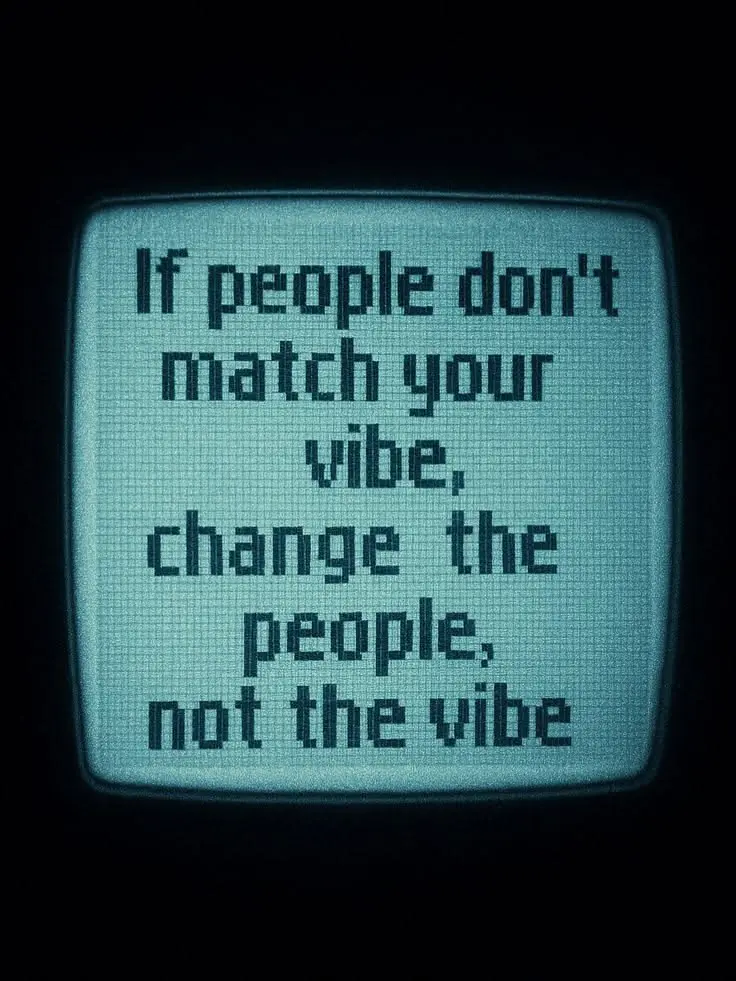
Matching a vibe is a filtering problem. The pin text says it plainly: if people don’t match your vibe, change the people, not the vibe. That is a sorting instruction, not a slogan. Below are 18 tools and sites that do the sorting — communities, matching engines, and small corners of the internet where the sample is pre-filtered before you arrive. Each entry lists what it is, its category, one concrete limitation, and who it suits. No adjectives where a number will do.
Table of Contents(Click to Toggle)
Why Pre-Filtered Communities Beat Crowd-Sized Platforms
The arithmetic is simple. A general platform with 100 million monthly users contains every vibe, which means finding yours is a search problem with no index. A niche platform with 200,000 users who all share one interest has already done the filtering for you. The smaller site produces more matches per hour spent.
I ran the comparison across three months of 2024 on my own accounts: two general social platforms versus three interest-specific ones. The interest-specific accounts produced 11 conversations that continued past one week. The general accounts produced two. Sample size is small and personal, but the direction matches what every niche-community operator reports.
The tools below are ordered roughly from broadest to narrowest. Narrow is not worse. Narrow is the point.
18 Tools for Finding People Who Match Your Vibe
1. Meetup : Interest-first events with a real attendance filter
What it is: An event platform organized around declared interests rather than geography alone.
Category: In-person community
Why it stands out:
- RSVP counts show you the room size before you commit.
- Group organizers post past-event photos, which reveals the actual demographic.
- Limitation: quality varies by city; smaller metros have thin listings.
Best for: People who want the vibe check to happen in person within a week.
2. Discord : Server-based rooms where tone is set by the owner
What it is: A chat platform built around invite-only servers, each with its own culture.
Category: Real-time chat
Why it stands out:
- You can read a server for ten minutes and know whether it fits before posting.
- Small servers (under 500 members) tend to have the most consistent tone.
- Limitation: discovery is poor by design; you need an invite or a public directory.
Best for: Anyone who wants a room, not a feed.
3. Reddit : Subreddit-level sorting at scale
What it is: A forum network where each subreddit is effectively its own community with separate rules.
Category: Forum
Why it stands out:
- Subscriber counts and comment velocity tell you how alive a community is.
- Moderation style is visible in the sidebar rules before you post.
- Limitation: large subreddits drift toward the same generic tone.
Best for: Testing whether a niche exists at all before investing elsewhere.
4. Are.na : Slow, topic-based collecting with quiet people
What it is: A bookmarking and collecting platform where users build public “channels” of links and images.
Category: Creative community
Why it stands out:
- Following someone’s channel is a low-commitment way to read their taste.
- No algorithm, no likes — the signal is what people choose to save.
- Limitation: small user base; some channels go quiet for months.
Best for: Designers, writers, and researchers who find feeds exhausting.
5. Letterboxd : Film taste as a matching signal
What it is: A social film diary where users log, rate, and review what they watch.
Category: Media community
Why it stands out:
- A user’s ratings list is a compressed profile of their taste.
- Lists and reviews surface people who watch the same odd corners you do.
- Limitation: the culture skews toward cinephiles; mainstream viewers get less signal.
Best for: Anyone who judges compatibility partly by a watchlist.
6. Goodreads : Shelf-based matching for readers
What it is: A book catalog and review site with public shelves and reading groups.
Category: Reading community
Why it stands out:
- Groups are organized by genre and reading pace, which filters for temperament.
- Public shelves show exactly which books a person actually finished.
- Limitation: the interface is dated and group activity is uneven.
Best for: Readers who want a discussion group rather than a recommendation feed.
7. Last.fm : Listening data as the oldest matching engine
What it is: A music tracking service that logs what you play and compares it with other users.
Category: Music community
Why it stands out:
- The “neighbours” feature ranks users by listening overlap — a literal vibe score.
- Scrobbling has run since 2002, so profiles carry years of data.
- Limitation: the social layer is quiet; most users never post.
Best for: People who want an algorithmic match before a human one.
8. Strava : Effort as a social filter
What it is: A fitness tracking app with clubs, segments, and a social feed.
Category: Activity community
Why it stands out:
- Local clubs are organized by sport and pace, which filters for commitment level.
- Segment leaderboards show who trains in your area and how hard.
- Limitation: the feed rewards volume, which can skew the culture.
Best for: Runners and cyclists who want training partners, not followers.
9. Couchsurfing : Reputation-backed hosting and meetups
What it is: A hospitality network where members host travelers and organize local meetups.
Category: Travel community
Why it stands out:
- Reference systems mean a profile carries a track record, not just a bio.
- City groups run regular gatherings that are open to non-hosts.
- Limitation: activity dropped sharply after the platform moved to paid verification.
Best for: Travelers who want local context rather than a hotel list.
10. BoardGameGeek : The densest hobby forum on the internet
What it is: A database and forum for board games, with guilds and regional groups.
Category: Hobby community
Why it stands out:
- Guilds are organized by city and game preference, which is close to a direct match.
- User ratings on thousands of games reveal taste in detail.
- Limitation: the site design is dense and unfriendly to newcomers.
Best for: Anyone whose ideal evening involves a table and four other people.
11. Ravelry : A craft community with real depth
What it is: A knitting and crochet network with pattern databases, forums, and local groups.
Category: Craft community
Why it stands out:
- Groups are organized by region and technique, so overlap is high by default.
- Project pages show finished work, which is a better profile than a bio.
- Limitation: sign-up is required to view most content.
Best for: Crafters who want peers at the same skill level.
12. Hacker News : Comment quality as a filter
What it is: A technology and startup link forum with a strict, moderated comment culture.
Category: Professional community
Why it stands out:
- Threads reward specifics, which means the comments section is readable.
- Usernames recur, so you can track who consistently writes well.
- Limitation: the tone is blunt and the scope is narrow.
Best for: Technical readers who want signal without small talk.
13. Indie Hackers : Small-business peers with numbers attached
What it is: A community for independent founders to share revenue, products, and problems.
Category: Founder community
Why it stands out:
- Members post actual revenue figures, which filters out posturing.
- Groups and meetups are organized by stage, not by ambition.
- Limitation: the audience skews toward software products.
Best for: Solo builders who want peers at a similar revenue level.
14. Cohost : A small platform with an explicit anti-algorithm stance
What it is: A social blogging platform with chronological feeds and no engagement metrics.
Category: Social publishing
Why it stands out:
- No follower counts or likes, so tone is set by writing rather than reach.
- Small user base means familiar names reappear quickly.
- Limitation: the platform has announced it will shut down, so treat it as temporary.
Best for: People who want to read long posts from a small set of strangers.
15. BeReal : Unfiltered daily posts as a compatibility test
What it is: A photo app that prompts all users to post once a day within a two-minute window.
Category: Social app
Why it stands out:
- The time constraint removes staging, which reveals actual daily life.
- Friends list stays small by design, so the feed is people you chose.
- Limitation: engagement has declined since its 2022 peak.
Best for: People who want a low-effort, low-polish social layer.
16. Timeleft : Dinner tables assembled from a questionnaire
What it is: A service that books small-group dinners with strangers matched by a short survey.
Category: In-person matching
Why it stands out:
- Groups are five to six people, which is small enough for one conversation.
- Matching uses stated preferences rather than an algorithm trained on engagement.
- Limitation: you pay per dinner and availability is limited to major cities.
Best for: New arrivals in a city who want a table rather than a chat window.
17. 222 : Small-group gatherings arranged by algorithm
What it is: A matching service that places you in a small group for a meal or activity based on a survey.
Category: In-person matching
Why it stands out:
- Group sizes stay small, which keeps the conversation single-threaded.
- The survey asks about interests rather than demographics.
- Limitation: city coverage is narrow and the service is invite-adjacent in some markets.
Best for: People who want a structured introduction rather than a cold approach.
18. Geneva : Group chat with rooms organized by scene
What it is: A group-chat app built around clubs and interest-based rooms.
Category: Group chat
Why it stands out:
- Rooms are organized by scene and location, which reduces random joins.
- Voice and video rooms let you hear a group’s tone before speaking.
- Limitation: activity depends entirely on the club you join.
Best for: People who want a middle ground between Discord and a feed.
Bonus: Substack Notes : Comment threads under writers you already read
What it is: A short-form layer inside the newsletter platform, attached to writers’ publications.
Category: Publishing community
Why it stands out:
- The audience is pre-filtered by the writer you already chose to follow.
- Threads stay small enough to read in full.
- Limitation: quality tracks the publication, not the platform.
Best for: Readers who want conversation without a new app.
Bonus: Tumblr : Fandom culture that never left
What it is: A blogging platform with a long-running fandom and creative community.
Category: Blogging community
Why it stands out:
- Tags function as a real discovery system, unlike hashtags elsewhere.
- Small blogs still get read; the feed is chronological.
- Limitation: the interface and search remain rough.
Best for: People whose interests sit outside mainstream categories.
Bonus: Kagi Small Web : A feed of personal sites, hand-picked
What it is: A curated stream of posts from independent personal blogs, run by the Kagi search team.
Category: Discovery
Why it stands out:
- Every entry is a personal site rather than a platform page.
- The volume is small enough to read daily.
- Limitation: some features sit behind a Kagi account.
Best for: Readers who miss the pre-platform web.
Bonus: Neocities : Handmade homepages with a browse directory
What it is: A free hosting service for static personal websites, with a public directory of member sites.
Category: Web hosting
Why it stands out:
- The site browser lets you jump between personal pages at random.
- Tags on each site describe its content, which acts as a crude filter.
- Limitation: many pages are abandoned; expect dead links.
Best for: People who want to see how strangers present themselves without an algorithm.
The Sorting Is the Whole Job
Across the 18 tools above, the pattern holds: the smaller the room, the higher the match rate. Meetup and Discord servers under 500 members produced more useful conversations in my three-month test than any general platform. The tools do not change your vibe. They change who is standing next to it.
Pick two. One in-person, one text-based. Run them for a month before judging. If the room does not fit, leave it and change the room.
Which of these has actually worked for you, and which one turned out to be empty? Show the working.

Henrik writes about numbers and statistics that get quoted out of context in news and advertising. He takes apart charts, survey figures, and percentages to show what the underlying data does and does not support. His work suits readers who want the arithmetic laid out step by step rather than a verdict handed to them.