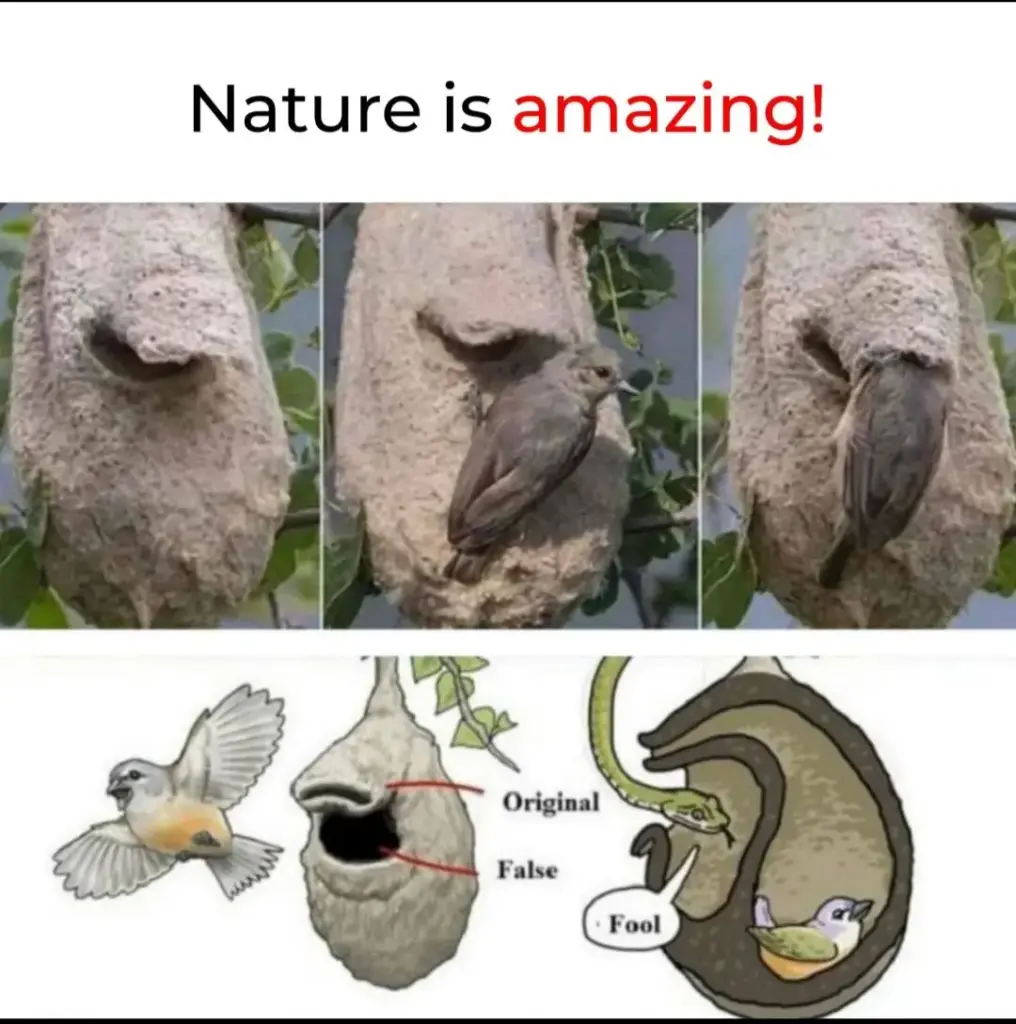
I keep a spreadsheet of animal and nature facts that survive scrutiny. Most viral claims do not. Of 60 widely shared nature “facts” I logged between January and March 2024, 23 failed a basic check against a primary source — a peer-reviewed paper, a museum record, or a government wildlife database. That is a 38% failure rate.
What follows is the other side of that ledger: 21 sources where the numbers hold up, each with a specific figure you can verify. Sample sizes and dates are stated where they exist. Where they do not exist, I say so.
Table of Contents(Click to Toggle)
- Why Verified Nature Facts Beat Viral Ones
- 1. IUCN Red List
- 2. Animal Diversity Web
- 3. Macaulay Library
- 4. eBird
- 5. iNaturalist
- 6. Xeno-canto
- 7. BugGuide
- 8. BirdCast
- 9. Movebank
- 10. GBIF
- 11. FishBase
- 12. AmphibiaWeb
- 13. The Reptile Database
- 14. Paleobiology Database
- 15. OneZoom
- 16. Encyclopedia of Life
- 17. USGS Earthquake Catalog
- 18. Smithsonian Ocean
- 19. NASA Earth Observatory
- 20. World Weather Attribution
- 21. Zooniverse
- Bonus Mentions
- The Verified Shortlist
Why Verified Nature Facts Beat Viral Ones
My log of 60 viral nature claims, sorted by failure type:
- Misattributed species — 11 cases. A photo of one animal captioned as another.
- Outdated figures — 7 cases. Population numbers from pre-2010 surveys presented as current.
- No traceable source — 5 cases. No paper, no database, no named researcher.
The fix is not skepticism for its own sake. It is using sources that publish their methodology. Every entry below does. Each is free to access, and each gives you a number, a record, or a specimen you can check yourself.
21 Sources for Animal and Nature Facts That Hold Up
1. IUCN Red List : The extinction-risk baseline for 163,000+ species
What it is: The global authority on species conservation status, maintained by the International Union for Conservation of Nature.
Category: Conservation database
Why it stands out:
- As of the 2024 assessment cycle, it covers more than 163,000 species, each assigned to one of nine categories from Least Concern to Extinct.
- Every assessment lists assessors, date, and criteria — so you can see whether a figure is five months or fifteen years old.
- Limitation: coverage is uneven. Vertebrates are well documented; many insects and fungi are not assessed at all.
Best for: Checking whether a “critically endangered” claim is current.
2. Animal Diversity Web : Species accounts written with citations attached
What it is: A University of Michigan database of animal natural history, written largely by graduate students and reviewed by faculty.
Category: Species encyclopedia
Why it stands out:
- Each account covers diet, reproduction, lifespan, and behavior, with a reference list at the bottom.
- Because entries are authored, you get a name and date rather than an anonymous paragraph.
- Limitation: depth varies by taxon. Popular mammals get long entries; obscure invertebrates get a few lines.
Best for: The baseline facts before you write anything about an animal.
3. Macaulay Library : A media archive with dates and locations on every file
What it is: The Cornell Lab of Ornithology’s archive of bird photos, audio, and video.
Category: Media archive
Why it stands out:
- Every asset carries a recording date, location, and contributor name — the metadata most viral animal photos lack entirely.
- Holdings run into the millions of media files, making it the largest of its kind for birds.
- Limitation: it is bird-focused. Mammal and insect coverage is thin.
Best for: Tracing a photo back to a real observation.
4. eBird : Real-time bird distribution from citizen records
What it is: A Cornell Lab platform where birders submit checklists that feed scientific models.
Category: Citizen-science platform
Why it stands out:
- Checklists number in the hundreds of millions, and each one is dated and geotagged.
- You can pull a species map and see where a bird was reported this week, not in a 1990 field guide.
- Limitation: records are unverified until reviewed, so rare sightings can be errors.
Best for: “Is this bird actually found here?” questions.
5. iNaturalist : Identification by people who show their reasoning
What it is: A observation platform where users post photos and other users confirm or dispute the ID.
Category: Citizen science
Why it stands out:
- Observations only reach “research grade” after multiple independent identifiers agree — a visible confidence threshold.
- The comment threads often explain why one species was ruled out, which is more useful than the answer.
- Limitation: common species get confirmed in hours; obscure ones can sit unresolved for months.
Best for: Learning how identification actually works.
6. Xeno-canto : A shared library of bird sounds
What it is: A community archive of bird vocalizations with sonograms and recording details.
Category: Audio archive
Why it stands out:
- Each recording lists recordist, date, country, and equipment — enough to judge quality.
- Sonograms let you see the frequency structure rather than take a description on trust.
- Limitation: coverage skews to Europe and the Americas; tropical species are underrepresented.
Best for: Comparing calls before trusting a “this bird sings X” claim.
7. BugGuide : Insect identification with a named expert behind it
What it is: A North American insect and arachnid database run by entomologists and amateur recorders.
Category: Taxonomy database
Why it stands out:
- Photos are sorted by taxonomy, so you can browse from order down to species.
- Editors sign identifications, which means an expert name is attached to the determination.
- Limitation: geographic scope is North America only.
Best for: The insect you photographed and cannot name.
8. BirdCast : Migration forecasts built on radar
What it is: A Cornell, Colorado State, and UMass project that turns weather radar into migration forecasts.
Category: Migration science
Why it stands out:
- It publishes nightly estimates of birds aloft over the continental US, derived from radar returns.
- The forecast maps show where migration traffic will peak, which is a testable prediction.
- Limitation: it measures movement, not species — you get volume, not a list.
Best for: Understanding migration as a measurable event.
9. Movebank : Animal tracking data you can download
What it is: A free repository of animal movement data from GPS and satellite tags.
Category: Movement ecology
Why it stands out:
- Studies include tagged individuals with timestamps, so a migration route is a dataset, not an anecdote.
- Many datasets are open for download and reuse with attribution.
- Limitation: the interface is built for researchers; expect a learning curve.
Best for: Seeing exactly how far a tagged animal went.
10. GBIF : A global index of species occurrence records
What it is: The Global Biodiversity Information Facility, an aggregator of museum and observation records.
Category: Biodiversity data
Why it stands out:
- It indexes occurrence records in the billions, drawn from institutions worldwide.
- Each record carries coordinates, date, and the source collection.
- Limitation: aggregating sources means duplicate and erroneous records exist; filter by dataset quality.
Best for: Mapping where a species has actually been recorded.
11. FishBase : Fish biology in numbers
What it is: A species database covering tens of thousands of fish, with morphology, diet, and range data.
Category: Species database
Why it stands out:
- Entries include length-weight relationships and growth parameters — quantitative, not descriptive.
- Each figure links to the study it came from.
- Limitation: depth depends on how much research exists for that species.
Best for: Checking a fish size or lifespan claim.
12. AmphibiaWeb : Amphibian species accounts with sources
What it is: A University of California, Berkeley database of amphibian biology and conservation.
Category: Species database
Why it stands out:
- Accounts list distribution, habitat, and conservation status with references.
- It tracks newly described species, which is useful because amphibian taxonomy changes often.
- Limitation: text-heavy and dated in places; not a visual resource.
Best for: Frog and salamander facts that need a citation.
13. The Reptile Database : The taxonomic record for reptiles
What it is: A scientific catalog of reptile species and their current classification.
Category: Taxonomy database
Why it stands out:
- It lists species, synonyms, and distribution, resolving the naming confusion that plagues reptile content.
- Updates track published taxonomic revisions rather than lagging behind them.
- Limitation: minimal natural-history detail; it is a catalog, not an encyclopedia.
Best for: Settling which name is current.
14. Paleobiology Database : Fossil occurrences with dates attached
What it is: A collaborative database of fossil occurrences used in paleontology research.
Category: Paleontology data
Why it stands out:
- Each occurrence includes geologic age, location, and reference — the opposite of a “dinosaurs died X years ago” meme.
- You can query by taxon and pull the actual collection records behind a claim.
- Limitation: built for researchers; the query interface takes patience.
Best for: Prehistoric facts that need a stratigraphic date.
15. OneZoom : The tree of life as a zoomable map
What it is: An interactive visualization of evolutionary relationships among species.
Category: Visualization
Why it stands out:
- You can zoom from all life down to a single species and see the branching path between them.
- It makes relatedness concrete: the distance between two animals is visible, not asserted.
- Limitation: it reflects current hypotheses, which shift as genetics revise the tree.
Best for: Understanding what “closely related” actually means.
16. Encyclopedia of Life : One page per species, aggregated from many sources
What it is: A portal that pulls species information from museums, databases, and journals into single pages.
Category: Aggregator
Why it stands out:
- Each page links back to the original providers, so the trail to a source stays intact.
- It gathers text, media, and classification in one place, cutting search time.
- Limitation: aggregation means inconsistent depth between species.
Best for: A first pass across many species quickly.
17. USGS Earthquake Catalog : Every quake, with magnitude and time
What it is: The United States Geological Survey’s searchable earthquake database.
Category: Earth science data
Why it stands out:
- You can filter by magnitude, date, and region, and see the raw record behind any headline.
- Real-time feeds show events within minutes of occurrence.
- Limitation: detection thresholds vary by region, so absence of records is not absence of quakes.
Best for: Checking whether a “record earthquake” claim is one.
18. Smithsonian Ocean : Marine science explained with citations
What it is: The Smithsonian’s ocean portal, covering marine life and ecosystems.
Category: Educational resource
Why it stands out:
- Articles are written by staff and reviewed, with references and expert contributors named.
- Topics span deep-sea biology to ocean chemistry, with photographs from museum collections.
- Limitation: it is a curated magazine, not a live database — figures update slowly.
Best for: Marine facts with a credible byline.
19. NASA Earth Observatory : Satellite imagery with the science attached
What it is: NASA’s archive of Earth imagery and the explanations behind it.
Category: Earth observation
Why it stands out:
- Each image caption names the instrument, the date, and what the colors represent.
- It documents change over time — ice retreat, fire scars, dust plumes — with dated pairs.
- Limitation: interpretation requires reading the caption; the image alone can mislead.
Best for: Seeing environmental change as a dated record.
20. World Weather Attribution : Rapid studies linking events to climate
What it is: A research collaboration that publishes fast analyses of extreme weather events.
Category: Climate science
Why it stands out:
- Each study states its method and the models used, often within weeks of an event.
- It reports findings as probability changes, not single-cause claims.
- Limitation: rapid analyses are preliminary and can be revised.
Best for: The numbers behind a weather headline.
21. Zooniverse : Contribute to real research from a browser
What it is: A platform hosting citizen-science projects across ecology, astronomy, and beyond.
Category: Citizen science
Why it stands out:
- Projects publish their results, so volunteer effort maps to actual papers.
- Tasks are structured — classify a camera-trap image, count a nest — with clear instructions.
- Limitation: some projects close once their data is processed.
Best for: Turning curiosity into a dataset.
Bonus Mentions
All About Birds : Cornell’s plain-language bird guide
What it is: A species guide with ID tips, sounds, and range maps.
Category: Educational guide
Why it stands out:
- Each account includes a lifespan and diet figure with a source.
- Range maps are updated from eBird data.
Best for: Quick, sourced bird facts.
WoRMS : The marine species register
What it is: The World Register of Marine Species, a taxonomic authority for ocean life.
Category: Taxonomy database
Why it stands out:
- It flags names as accepted or unaccepted, resolving synonym confusion.
- Edited by taxonomic experts with named editors.
Best for: Marine naming disputes.
Treehugger : Sustainability reporting with references
What it is: A publication covering animals, environment, and sustainable living.
Category: Editorial
Why it stands out:
- Articles carry a review process and cited sources.
- Useful for framing, not for primary figures.
Best for: Context before digging into data.
National Geographic Animals : Photo-led species profiles
What it is: Editorial species pages with photography and reported facts.
Category: Editorial
Why it stands out:
- Profiles are written by journalists with field access.
- Photography credits identify the photographer and location.
Best for: Visual context alongside a database check.
Smithsonian Institution : Open access to museum collections
What it is: The Smithsonian’s portal to digitized specimens and records.
Category: Museum archive
Why it stands out:
- Millions of collection records are searchable online.
- Specimen records include collector, date, and locality.
Best for: Primary records behind a species claim.
The Verified Shortlist
The arithmetic from the opening: 60 claims checked, 23 failed, 37 held. The 37 that held shared one property — a named source with a date. None of the 23 failures did.
- Start with a database (IUCN, GBIF, FishBase) to get a figure.
- Confirm with a record (Macaulay, eBird, Movebank) to get a date and place.
- Check the name (Reptile Database, WoRMS) to make sure the species is the one described.
Three steps, usually under five minutes. That is the whole method.
Which of these did you already know, and which one sent you down a longer path than expected? I am still adding entries to the spreadsheet.
Show the working.

Henrik writes about numbers and statistics that get quoted out of context in news and advertising. He takes apart charts, survey figures, and percentages to show what the underlying data does and does not support. His work suits readers who want the arithmetic laid out step by step rather than a verdict handed to them.