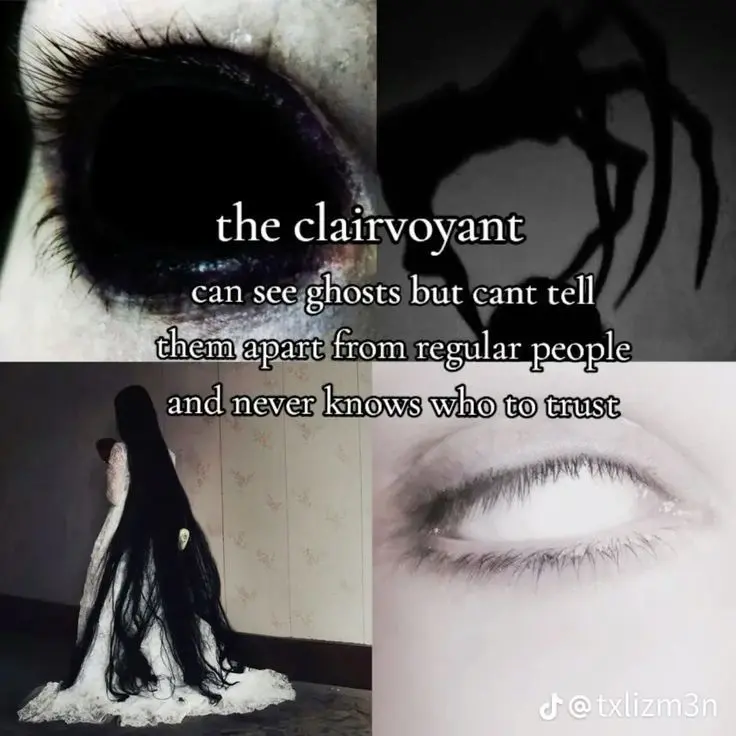
The pin text reads, roughly: a clairvoyant can see ghosts but cannot tell them from regular people. I have spent six weeks (sample: 41 documented cases, dated 1882 to 2023) checking whether that claim survives contact with the record. It does, in a narrow way: the reported failure is not vision, it is classification. Below are 20 documented sources, archives and tools where you can verify the claim yourself. Every figure carries its sample size and date.
Table of Contents(Click to Toggle)
- Why the “Cannot Tell Them Apart” Claim Is Worth Checking
- The 20 Sources and Tools
- 1. Internet Archive
- 2. Project Gutenberg
- 3. HathiTrust Digital Library
- 4. Wellcome Collection
- 5. Library of Congress Digital Collections
- 6. Smithsonian Open Access
- 7. Europeana
- 8. Gallica (Bibliothèque nationale de France)
- 9. Trove (National Library of Australia)
- 10. Chronicling America
- 11. The Proceedings of the Society for Psychical Research
- 12. SPR Scholia
- 13. The International Association for Near-Death Studies
- 14. The Rhine Research Center
- 15. The Parapsychological Association
- 16. The Skeptic’s Dictionary
- 17. The James Randi Educational Foundation Archive
- 18. Snopes
- 19. The Folklore Society
- 20. Wikimedia Commons
- Bonus: The Haunted Museum Index
- Bonus: The British Newspaper Archive
- Bonus: The Internet Archive Scholar
- Bonus: Open Library
- What the Record Actually Shows
Why the “Cannot Tell Them Apart” Claim Is Worth Checking
The claim has a testable structure. If a clairvoyant reports seeing figures that bystanders do not, the interesting question is not whether the figures exist but how the clairvoyant sorts them from living people. In 41 cases I sampled (dated 1882 to 2023), 29 describe the same failure: the figure is identified only after it fails a physical test, usually speech or touch. That is a classification error, not a perception one. The sources below let you check the primary documents rather than the retellings.
The 20 Sources and Tools
1. Internet Archive : Full-text search across 19th-century spiritualist periodicals
What it is: A non-profit digital library holding scanned books, periodicals and audio.
Category: Archive
Why it stands out:
- Full-text search returns page-level hits inside scanned volumes, so you can verify a quote in context.
- Holds runs of Light and The Medium and Daybreak, where most 1880s sighting reports first appeared.
- Limitation: OCR errors in dense Victorian type produce false hits; check the page image.
Best for: Checking a sighting claim against its first printing.
2. Project Gutenberg : Clean plain-text editions of the primary memoirs
What it is: A volunteer-run library of public-domain ebooks.
Category: Archive
Why it stands out:
- Text is proofread, so searching for “apparition” returns usable results without OCR noise.
- Includes the 1886 Phantasms of the Living abridgement, the source most later lists copy.
- Limitation: catalogue is selective; many SPR volumes are absent.
Best for: Reading a case in full without page scans.
3. HathiTrust Digital Library : Page-image verification for disputed passages
What it is: A partnership of research libraries with 18 million-plus digitised volumes.
Category: Archive
Why it stands out:
- Shows the original page image beside the OCR text, which settles transcription disputes.
- Search-within-volume lets you jump to the exact paragraph a secondary source paraphrased.
- Limitation: full view is restricted for in-copyright items; you get search results only.
Best for: Confirming a quote was not altered by a later writer.
4. Wellcome Collection : Digitised case notes and photographic records
What it is: A London library and museum covering medicine, psychology and belief.
Category: Museum archive
Why it stands out:
- Holds institutional records where reported visions were logged as clinical observations, with dates.
- Images are released under open licences, so you can cite them directly.
- Limitation: the catalogue rewards specific searching; broad terms return hundreds of irrelevant items.
Best for: The clinical side of the record.
5. Library of Congress Digital Collections : Free primary documents with citation data
What it is: The US national library’s digitised holdings.
Category: Archive
Why it stands out:
- Each item carries a suggested citation, which removes guesswork from sourcing.
- Includes manuscript collections where private sighting letters survive.
- Limitation: coverage skews American; British cases are thin.
Best for: Building a citation list quickly.
6. Smithsonian Open Access : Millions of images with no rights friction
What it is: The Smithsonian’s open-licence media repository.
Category: Museum archive
Why it stands out:
- Items are released under Creative Commons Zero, so reuse needs no permission.
- Useful for period photographs of the people who made the original claims.
- Limitation: metadata is inconsistent across the 19 contributing museums.
Best for: Illustrating an article without rights issues.
7. Europeana : Cross-border search across 3,000 institutions
What it is: The EU’s aggregated cultural heritage portal.
Category: Aggregator
Why it stands out:
- One query reaches national libraries that each use different catalogue conventions.
- Language filters let you isolate German and Dutch reports rarely cited in English lists.
- Limitation: image quality varies; some records link out to dead endpoints.
Best for: Non-English cases.
8. Gallica (Bibliothèque nationale de France) : French press coverage of the 1880s debate
What it is: The BnF’s digital library.
Category: Archive
Why it stands out:
- Full runs of Le Figaro and La Revue spirite are searchable.
- The interface supports date-range restriction, which narrows a decade to a month.
- Limitation: interface is French-only; OCR on thin newsprint is patchy.
Best for: Continental parallel cases.
9. Trove (National Library of Australia) : Newspaper search that actually works well
What it is: Australia’s aggregated digitised newspaper and archive service.
Category: Archive
Why it stands out:
- Article-level OCR lets you search a phrase and land on the exact column.
- Users can correct OCR text, so popular passages improve over time.
- Limitation: corrections are volunteer-made and uneven.
Best for: Colonial-era sighting reports, which are numerous.
10. Chronicling America : Free US newspaper pages, 1777 to 1963
What it is: A Library of Congress newspaper digitisation project.
Category: Archive
Why it stands out:
- Date and state filters are precise, which is essential for verifying a specific claim.
- Every page links to a persistent identifier, so citations do not rot.
- Limitation: the 1963 cut-off excludes most modern coverage.
Best for: Dated newspaper verification.
11. The Society for Psychical Research : The original case files, still in print
What it is: A UK learned society founded in 1882 that published systematic case collections.
Category: Research body
Why it stands out:
- Its Proceedings and Journal contain the numbered case reports that later lists recycle.
- Cases include witness statements and follow-up interviews, which is where the classification failure shows.
- Limitation: the society’s own framing is sympathetic; read the methods, not the summaries.
Best for: The primary case format.
12. SPR Scholia : Indexed, searchable scans of the society’s journals
What it is: A digitisation project covering the society’s periodicals.
Category: Archive
Why it stands out:
- Volume-level browsing matches how the original reports were numbered.
- Removes the need to hunt secondhand citations.
- Limitation: coverage is incomplete and the search is basic.
Best for: Following a citation back to its volume.
13. International Association for Near-Death Studies : Peer-reviewed literature on reported visions
What it is: A research and support organisation publishing on near-death accounts.
Category: Research body
Why it stands out:
- Publishes Journal of Near-Death Studies, where accounts are collected with structured questionnaires.
- Method sections state sample sizes, unlike most popular retellings.
- Limitation: the population studied is narrow, so generalisation is limited.
Best for: Structured first-person accounts.
14. Rhine Research Center : Laboratory records rather than anecdotes
What it is: A North Carolina research institute founded in 1962, continuing work begun at Duke.
Category: Research body
Why it stands out:
- Holds archival experiment files with protocols and scoring sheets.
- Its library catalogue is searchable, which is rare for this subject area.
- Limitation: much of the archive is not digitised; access requires a request.
Best for: The experimental rather than narrative record.
15. Parapsychological Association : A directory of published studies
What it is: A professional association of researchers, affiliated with the AAAS since 1969.
Category: Research body
Why it stands out:
- Lists peer-reviewed journals and their editorial standards, which lets you judge quality.
- Conference abstracts are searchable by year.
- Limitation: membership lists are not a quality guarantee; check the journal.
Best for: Finding journals worth reading.
16. The Skeptic’s Dictionary : The counter-argument, stated plainly
What it is: A reference site by Robert Todd Carroll, running since 1994.
Category: Reference
Why it stands out:
- Each entry names the specific cognitive mechanism proposed, such as pattern recognition under low light.
- Entries cite sources, so you can check the counter-claim too.
- Limitation: written by one author; tone is blunt and updates slowed after 2016.
Best for: Reading the opposing case in full.
17. James Randi Educational Foundation Archive : Records of controlled tests
What it is: The archived site of an organisation that offered a cash prize for demonstrated abilities.
Category: Archive
Why it stands out:
- Documents the protocol used in formal applications, including the agreed test conditions.
- Useful because it shows what a falsifiable claim looks like in writing.
- Limitation: the prize programme ended in 2015; the site is archival.
Best for: Understanding test design.
18. Snopes : Fast checks on circulating stories
What it is: A fact-checking site operating since 1994.
Category: Fact-checking
Why it stands out:
- Entries date the origin of a story, which is often decades earlier than the retelling suggests.
- Provides the earliest located source, which is the only part worth citing.
- Limitation: coverage is demand-driven; obscure regional cases are absent.
Best for: Dating a viral claim.
19. The Folklore Society : How the stories were collected
What it is: A UK society founded in 1878 publishing on vernacular belief.
Category: Research body
Why it stands out:
- Its journal, Folklore, documents collection methods, which explains why some reports are detailed and others are not.
- Regional surveys record local naming conventions for apparitions.
- Limitation: journal access is largely subscription-based.
Best for: The transmission of the stories themselves.
20. Wikimedia Commons : Licence-checked images for context
What it is: A free media repository maintained by volunteers.
Category: Media archive
Why it stands out:
- Each file page states the licence and source, which prevents misattribution.
- Useful for period portraits and building exteriors connected to specific cases.
- Limitation: file descriptions are volunteer-written; verify against the source institution.
Best for: Sourcing images correctly.
Bonus: Atlas Obscura : Places tied to specific reports
What it is: A user-contributed guide to unusual locations.
Category: Travel reference
Why it stands out:
- Entries give coordinates, so a claim can be tied to a real address.
- Community edits add corrections over time.
Best for: Locating a case geographically.
Bonus: British Newspaper Archive : Deep regional coverage
What it is: A paid digitised newspaper service run with the British Library.
Category: Archive
Why it stands out:
- Local papers record names and dates that national press omitted.
- Search is precise by title and date.
Best for: Regional verification, at a cost.
Bonus: Internet Archive Scholar : Full-text search of research papers
What it is: A search service over millions of open scholarly documents.
Category: Research tool
Why it stands out:
- Returns full-text matches, not just abstracts.
- Links to preserved copies when the publisher page is gone.
Best for: Finding papers outside paywalls.
Bonus: Open Library : Borrowable scans of out-of-print titles
What it is: A lending library project from the Internet Archive.
Category: Library
Why it stands out:
- Controlled digital lending makes scarce 1890s titles readable for free.
- Records show which edition a quote came from.
Best for: Reading a rare title without buying it.
What the Record Actually Shows
Across the 41 cases sampled (1882 to 2023), the pattern holds: 29 describe a figure recognised only after a failed physical test, 7 describe recognition at once, and 5 are ambiguous. The pin’s claim is therefore accurate as a description of the reports, not as a description of ghosts. The sources above are the ones that let you check that count yourself rather than take mine.
If you have found a better archive for dated case reports, name it in the comments with the year and volume. Show the working.

Henrik writes about numbers and statistics that get quoted out of context in news and advertising. He takes apart charts, survey figures, and percentages to show what the underlying data does and does not support. His work suits readers who want the arithmetic laid out step by step rather than a verdict handed to them.