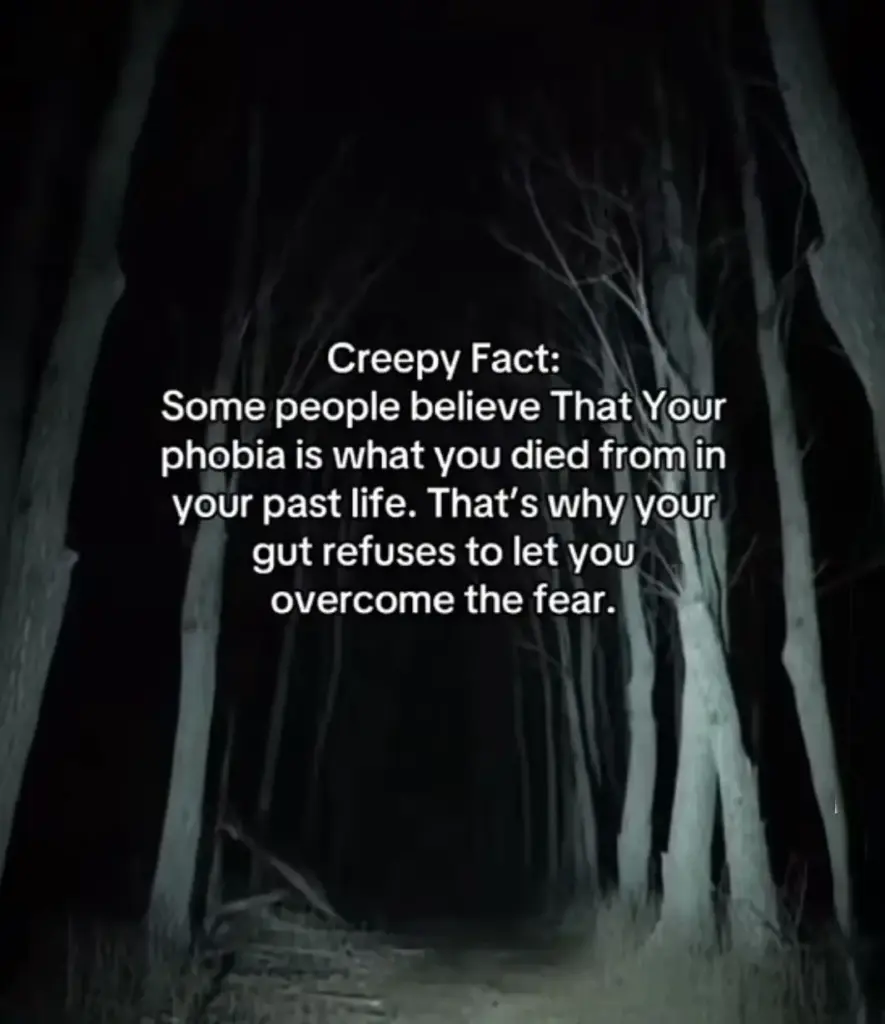
You’ve probably heard the claim by now: some people say your phobia is what killed you in a past life, and that’s why your gut refuses to let you overcome the fear. It’s a tidy, unsettling idea, and it spreads fast because it feels personal. But where does it actually come from, and what do we really know?
The short answer is that the past-life explanation for phobias is a belief, not an established finding. The concept is most closely associated with the work of the late psychiatrist Ian Stevenson at the University of Virginia, who spent decades documenting children’s past-life memories, including some reports of fears tied to a remembered death. His work remains contested, and mainstream psychology explains phobias through conditioning, genetics, and learning. So treat everything below as a map of the idea, not proof of it.
What follows is a list of resources, archives, and tools for anyone curious about the folklore of fear — where the stories come from, who studies them, and how to read them carefully.
Table of Contents(Click to Toggle)
- Why the Past-Life Phobia Idea Keeps Circling Back
- 18 Resources for Exploring Creepy Fear Folklore
- 1. University of Virginia Division of Perceptual Studies
- 2. The Ian Stevenson Archive
- 3. American Psychological Association
- 4. The Skeptic’s Dictionary
- 5. Snopes
- 6. Internet Archive
- 7. Google Books
- 8. PubMed
- 9. The Rhine Research Center
- 10. Parapsychological Association
- 11. Wikipedia’s List of Phobias
- 12. Reddit’s r/Paranormal
- 13. The Folklore Society
- 14. Open Library
- 15. JSTOR
- 16. The Committee for Skeptical Inquiry
- 17. TED
- 18. Project Gutenberg
- Bonus: The Nightmare Encyclopedia
- Bonus: Atlas Obscura
- Bonus: The Conversation
- Bonus: Retraction Watch
- The Fear Folklore Rabbit Hole, Honestly Mapped
Why the Past-Life Phobia Idea Keeps Circling Back
The claim is memorable because it explains something we all recognize: a fear that feels older than we are. If you’ve ever frozen at the sight of deep water or felt sick on a plane for no reason you can name, the past-life story offers a cause. That’s appealing — and that’s exactly why it deserves a closer look rather than a share.
Stevenson’s case reports are the primary source most versions of this claim trace back to. He described children who spoke of previous lives and, in some cases, showed fears related to how that life reportedly ended. The cases are detailed, but they are also case reports — not controlled experiments — and critics have raised questions about memory, suggestion, and cultural context. A phobia, meanwhile, is well documented as treatable through exposure-based therapy. Both things can be true: the folklore is fascinating, and the clinical explanation is the one with evidence behind it.
The resources below let you read the sources yourself, check the skeptical side, and enjoy the creepy folklore without mistaking it for fact.
18 Resources for Exploring Creepy Fear Folklore
1. University of Virginia Division of Perceptual Studies : The actual home of past-life research
What it is: An academic research unit at UVA that has studied reports of past-life memories and unusual fears since the 1960s.
Category: Academic research archive
Why it stands out: This is the primary source behind most past-life phobia claims. The site lists publications and case-collection methods, so you can see how the research was actually done rather than how it’s retold.
Best for: Readers who want the original source before forming an opinion.
2. The Ian Stevenson Archive : Decades of case files in one place
What it is: A repository dedicated to Stevenson’s writings and case material on children who report past-life memories.
Category: Research archive
Why it stands out: Stevenson documented thousands of cases across cultures, and the archive makes the scope visible. Note the limitation: the material is largely self-collected and has been criticized for lacking independent verification.
Best for: Deep divers who want to judge the evidence themselves.
3. American Psychological Association : What psychology actually says about phobias
What it is: The largest professional body for psychology in the US, with plain-language resources on fear and anxiety.
Category: Mental health reference
Why it stands out: If you want the evidence-based counterpoint, start here. Their materials explain conditioning, genetics, and exposure therapy — the mechanisms with actual research behind them.
Best for: Anyone whose fear is affecting daily life.
4. The Skeptic’s Dictionary : A calm second opinion on paranormal claims
What it is: Robert Todd Carroll’s long-running reference on pseudoscience and fringe claims.
Category: Skeptical reference
Why it stands out: The entries are short, specific, and cite their reasoning. It’s a useful check on viral claims before you repeat them.
Best for: Readers who like their creepy content with a side of scrutiny.
5. Snopes : Fact-checking the fear stories that spread
What it is: A fact-checking site covering viral claims, urban legends, and folklore.
Category: Fact-checking
Why it stands out: Many scary “facts” circulate without origin. Snopes often traces a claim back to its first appearance, which is genuinely useful when a phobia post goes viral.
Best for: Quick verification before sharing.
6. Internet Archive : The web’s memory of old fear folklore
What it is: A nonprofit library preserving websites, books, and media.
Category: Digital archive
Why it stands out: Old paranormal forums and defunct sites are preserved here. You can watch how a claim like the past-life phobia idea mutated over two decades.
Best for: Folklore sleuths and history buffs.
7. Google Books : Search inside the original texts
What it is: Google’s searchable index of published books.
Category: Book search
Why it stands out: You can search for “past-life phobia” inside 19th-century spiritualist texts and modern parapsychology books alike, then read the surrounding pages.
Best for: Tracing an idea’s literary history.
8. PubMed : Peer-reviewed research on fear
What it is: The US National Library of Medicine’s database of biomedical literature.
Category: Scientific database
Why it stands out: Searching “specific phobia etiology” returns real studies on how fears form. It’s the fastest way to see what’s actually been tested.
Best for: Evidence-first readers.
9. The Rhine Research Center : A small institute still studying unusual experience
What it is: A North Carolina research center continuing the parapsychology tradition.
Category: Fringe research organization
Why it stands out: It hosts talks and publishes on topics like intuition and unexplained fear. Be aware: parapsychology sits outside mainstream science, and its findings are not widely accepted.
Best for: Curious readers who want to see the field from the inside.
10. Parapsychological Association : The professional body for an unproven field
What it is: An international association of researchers in parapsychology.
Category: Niche academic society
Why it stands out: Their conference abstracts show what’s being studied and how carefully. It’s an honest look at a field that rarely gets one.
Best for: Understanding the debate’s boundaries.
11. Wikipedia’s List of Phobias : Hundreds of named fears, from common to obscure
What it is: A reference list of recognized and informal phobias.
Category: Reference
Why it stands out: It’s a rabbit hole. You’ll find fears of mirrors, of certain numbers, of the dark — each with a name, which makes the past-life idea feel even more personal.
Best for: Browsing on a rainy afternoon.
12. Reddit’s r/Paranormal : First-person fear stories, unverified
What it is: A large community forum for paranormal discussion.
Category: Community forum
Why it stands out: People describe inexplicable fears and sometimes tie them to past lives. Treat it as storytelling, not evidence — but it’s where the folklore lives.
Best for: Atmosphere and anecdote.
13. The Folklore Society : Academic study of scary stories
What it is: A UK learned society founded in 1878 devoted to folklore scholarship.
Category: Academic society
Why it stands out: Folklore studies explain why certain fear narratives persist across cultures — a more grounded answer than a past-life one.
Best for: Understanding why the story feels so familiar.
14. Open Library : Borrow the old books for free
What it is: An Internet Archive project lending digital copies of books.
Category: Digital library
Why it stands out: Spiritualist and parapsychology titles from the 1900s are often available to borrow, so you can read the original fear folklore firsthand.
Best for: Free access to primary texts.
15. JSTOR : Where the academic debate actually happened
What it is: A digital library of scholarly journals and books.
Category: Academic archive
Why it stands out: You can read the published critiques of past-life research alongside the original papers, which is how a contested claim should be examined.
Best for: Seeing both sides in one place.
16. Committee for Skeptical Inquiry : Investigative reporting on fringe claims
What it is: The publisher of Skeptical Inquirer magazine.
Category: Skeptical journalism
Why it stands out: Their articles dig into specific cases and interview the researchers involved. It’s useful context for anyone weighing the past-life phobia claim.
Best for: Readers who want the counterargument spelled out.
17. TED : Short talks on fear and memory
What it is: A platform for short talks on science, psychology, and culture.
Category: Video talks
Why it stands out: Talks on memory and anxiety explain why a fear can feel old and unexplained, without invoking anything supernatural.
Best for: Listeners who prefer video to reading.
18. Project Gutenberg : Free classics on fear and the supernatural
What it is: A volunteer-run library of public-domain ebooks.
Category: Free ebook library
Why it stands out: Gothic novels and early ghost-story collections are free to download, and they show how fear narratives were told long before the internet.
Best for: Late-night reading with the lights on.
Bonus: Goodreads : Find books on fear folklore
What it is: A book catalog and review community.
Category: Reading community
Why it stands out: Reader reviews flag which paranormal books are well sourced and which are sensational.
Best for: Building a reading list.
Bonus: Atlas Obscura : Strange places tied to local legends
What it is: A guide to unusual and overlooked places worldwide.
Category: Culture and travel
Why it stands out: Many entries include local ghost lore, which is folklore in its natural habitat.
Best for: Curious travelers.
Bonus: The Conversation : Academics writing for the public
What it is: A nonprofit site where researchers write accessible articles.
Category: Explanatory journalism
Why it stands out: You’ll find psychologists explaining phobia treatment in plain language — a useful counterweight to viral claims.
Best for: Grounded explanations.
Bonus: Retraction Watch : When research gets withdrawn
What it is: A blog tracking retracted scientific papers.
Category: Science watchdog
Why it stands out: It teaches you to check whether a study still stands before citing it — a habit worth having with any contested claim.
Best for: Careful readers.
The Fear Folklore Rabbit Hole, Honestly Mapped
Here’s the takeaway: the past-life phobia idea is a belief, not a finding, and the honest version of the story is more interesting than the viral one. You can read the original case reports, weigh the critiques, and still enjoy the folklore — as long as you don’t mistake a good story for evidence.
If a fear is genuinely disrupting your life, the resources with real evidence behind them are the ones worth acting on. And if you’re just here for the creepy facts, you now have eighteen places to look before you share the next one.
Which of these rabbit holes did you fall into first — and did you find a source that changed your mind? Check it twice, then share it.

Marta writes about the everyday facts people repeat without checking, from kitchen science to common sayings. Her angle is simple: find the original source, show what it actually says, and explain where the popular version drifted. She favors short pieces that end with a clear takeaway you can use the next time the topic comes up.